For HR and people leaders in male-dominated industries

You didn't take a people job to be firefighting grievances...

We show you what your culture is costing you, in hours and pounds, and exactly where to fix it first.

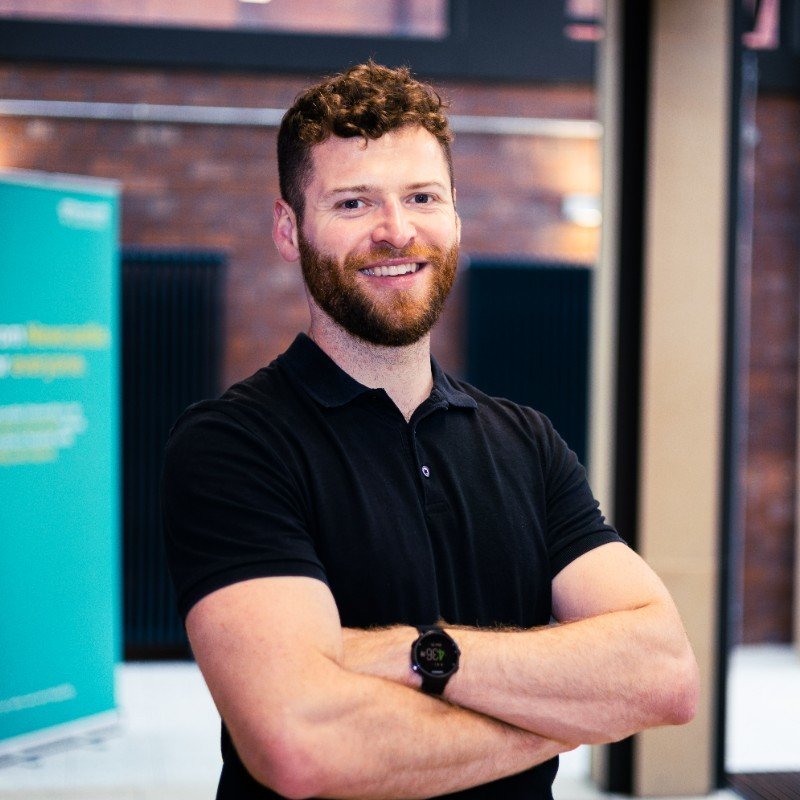
Dr Ollie Bell

Dr Ollie Bell – PhD in behaviour change. He runs every diagnostic himself, and takes five a month. Forty-five minutes with a doctorate-level specialist, at no charge.

45 minOn a call, not a form
Your dataYour figures, not sector averages
5 a monthThe most we take on
An engineer in hi-vis and a hard hat reviewing work on site
Our core sectors

Built for operational workplaces

Shift patterns, safety-critical environments, dispersed teams and the office-to-floor divide. Some of the people we help work night shifts in the middle of a tunnel. A lunchtime webinar was never going to reach them.

Manufacturing

Addressing the pressures carried by shift teams, line supervisors and the people who cover when someone does not turn up.

Engineering

Addressing the unique pressures faced by engineers, project teams and technical professionals promoted into managing people.

Energy

Addressing the isolation of technicians working offshore, on rotation and a long way from head office.

Technology

Addressing the strain on technology businesses with real operations, where the office and the floor rarely see the same message.

The split nobody talks about

Half your job is the work you trained for. The other half is firefighting.

Guess which half gets the week. Everything we do is aimed at flipping that split.

The half that eats the week

The HR caseload

  • Grievances and disciplinaries, and the volume keeps climbing
  • Conflict between managers and their teams, and inside teams
  • Absence management, and the cover, overtime and cost behind it
  • Teaching technically brilliant people how to manage people
The half you were hired for

People partnering

  • Business strategy, and a seat at the table when it is set
  • Leadership and manager development that actually sticks
  • Workload, priorities and how the work is organised
  • The culture work that keeps getting pushed to next quarter
What you might be seeing

You see the signs long before you see the cause

They look like separate problems. Usually they are one problem showing up in six places.

Grievances stacking up

Employment lawyers are reporting record volumes, and employees now draft them with AI. Every one lands on the same desk.

Absence nobody can explain

Days lost climb quietly, and nobody has ever put a pound figure next to them.

Good people leaving

Knowledge walks out with them, recruitment gets harder, and the cost is never quantified.

Frustrations boiling over

Conflict between managers and teams, and inside teams, handled unhealthily and handled late.

Managers out of their depth

The best engineer becomes the worst manager. That is not a personal failure, it is a development gap.

No time for the real job

Strategy and partnering keep getting pushed to next quarter, because the caseload never stops.

Dr Ollie Bell

Dr Ollie Bell – PhD in behaviour change. Nothing to prepare beyond your own figures. Five calls a month, run personally by the founder.

Why nothing changed last time

The awareness days didn't work

It isn't your fault, and it isn't your people.

Awareness days, resilience workshops, stress courses, generic accreditations, the EAP. All of it supports an individual's ability to cope with pressure. None of it changes the environment creating the pressure: how work is organised, led and communicated.

So the business runs the course, steps back, and concludes that none of it worked. The person was supported. The environment was left exactly as it was.

The myth

"There's one activity that fixes culture"

There is not one, and that is the whole point. We need to know what your problem is before anyone hands you a solution.

The myth

"Counselling will fix it"

It equips individuals to endure the environment. Support people, absolutely. Then fix the thing that keeps hurting them.

The myth

"Awareness days work"

They arrived after COVID as activity-shaped answers to structural cracks. Performative is not transformative.

The myth

"Someone will come in and fix everything"

We are evidence first, not promise first. You see the problem, on your own numbers, before you are asked to buy the fix.

How we work

The Kalobration Method

Culture is behaviour: the minimum behaviours a business is willing to tolerate. Behaviours do not change because of a poster or an awareness day. They change when you find what is actually driving them and change the environment around them. That is behaviour-change science, and it is what our founder's doctorate is in.

01

Measure

Find the fires

Evidence first: surveys mapped to occupational health frameworks, focus groups, leadership interviews, and your own turnover, absence and grievance data. You get where the fires are, what they cost, and why they are burning.

02

Mobilise

Align the leaders

Findings go to your leadership team, not into a drawer. Priorities are agreed for the short, medium and long term, and owned in the room. Culture stops being HR's solo job.

03

Move

Fix it and prove it

Bespoke work against the agreed priorities: leadership and manager development, team programmes and targeted learning. Then we re-measure, so the change is proven rather than assumed.

What we deliver

The Kalobration Programme, in four pillars

One journey that finds the problems, fixes them, and proves the fix worked. You never pay for a report.

Pillar 01

The Deep Diagnostic

A full evidence sweep: framework-mapped surveys, focus groups, leadership interviews and analysis of the data you already hold. You get a hotspot report: where the fires are, what they cost, why they are burning, and where to start.

Removes: "we don't actually know what's wrong"

Pillar 02

The Leadership Kalobration

Facilitated working sessions with your leadership team: the findings, the costs, and agreed priorities for the short, medium and long term, owned by named people in the room.

Removes: "I own culture alone"

Pillar 03

The Fix

Bespoke delivery against those priorities. Dr Ollie Bell delivers directly where it is his specialism: leadership and manager development, team programmes, targeted learning. Where it is not, we bring in a trusted specialist and stay accountable for the outcome.

Removes: "a report that sits on my desk"

Pillar 04

The Proof Loop

Re-measurement at agreed intervals: engagement, HR caseload, absence and turnover against your original baseline. That becomes the evidence pack for the board, and the raw material for an award entry.

Removes: "how do I show it worked?"

Included with every programme

  • The Manager's Firefighting Playbook. Practical scripts for the five hardest people conversations, so managers get quick wins while the diagnostic runs.
  • Award-entry support. We draft a regional award submission from your Proof Loop data, so the work gets the recognition it earned.
  • The partner bench. Pre-vetted specialists in inclusion training, EAP, HR and leadership development, coordinated by us.
Our commitment

The delivery guarantee

Findings presented to your leadership team within the agreed number of weeks of data access, or we keep working free until they are.

We do not offer a money-back guarantee on culture outcomes, because too many variables sit outside our control. We would rather be honest than sell a hollow promise.

How every engagement begins

Two free steps before you spend a single pound

Nobody should have to buy an audit on faith. You see the quality of the evidence and the thinking twice over, at no cost, before any invoice exists.

Step one, free

The Culture Cost Diagnostic

A 45-minute call. Bring your headcount, average salary, turnover, sickness figures and an honest estimate of presenteeism. We work the calculator live and show you two numbers nobody has shown you before.

What culture drift costs the business

Per year, in pounds, on your own figures.

What firefighting costs you

In hours per month, taken out of your week.

Step two, free

The Leadership Kalobration Session

If the diagnostic shows a real problem, the next step is a two-hour working session with your leadership team, arranged by you. The exchange is explicit and fair: the session is free, and in return you share your data so we arrive with substance.

  • Your leaders see the evidence and the company-level cost
  • They hear why the activity-led approach failed
  • They leave with two or three actions they own, whether or not you ever spend a pound

Five organisations a month, maximum

Every diagnostic is run personally by Dr Ollie Bell, so the diary is genuinely limited. Every month the problem runs is another month of the number.

Dr Ollie Bell

Dr Ollie Bell – PhD in behaviour change. A doctorate-level specialist in the room for 45 minutes, before you are asked for anything.

The transformation

From firefighting grievances to leading culture strategy

Before Kalobrate
After Kalobrate
The week disappears into grievances, disciplinaries and conflict.
The caseload shrinks at the source, and the week has room for strategy.
Culture is HR's problem, owned alone.
Culture is a leadership priority, with named owners and agreed actions.
The cost of absence and turnover is invisible, and quietly accepted.
One number, on one page, tracked over time and moving the right way.
A wellbeing calendar full of activities, and nothing changes.
A short list of evidence-backed priorities that visibly change how work feels.
"I should have the answers, and I don't."
"I brought in the evidence, aligned the leaders, and it worked."
Proof

Work grounded in real operations

Engineering

BEL Engineering

239 employee attendances across a 20-session workplace learning programme. Practical, shift-friendly sessions on sleep, stress, resilience and men's mental health.

Wind energy

Dynatech Renewables

Technicians' comfort discussing mental health with colleagues moved from 3.9 to 4.1, with full engagement, through tailored workshops and leader-led onboarding support.

Passenger transport

CPT

Around 100 bus and coach operators engaged across two regional events, with sector-specific talks linking mental health, safety and business performance.

Multi-site operations

STR Enterprises

Employee listening across the business identified what to protect through growth, turning family values into practical leadership decisions.

Delivery experience also includes major employers such as Tombola and Flutter.

Ollie's knowledge, enthusiasm, and approachable manner have made a real difference to our team. His practical and impactful sessions have resulted in noticeable positive changes in behaviours within our teams.
Claire Hopkins – HR Manager, BEL Engineering

"Rather than offering generic solutions, he took the time to listen and tailor his feedback to the realities of our business operation and workforce. His recommendations were clear, relevant, and achievable."

Group HR Director – Multi-site operations business

"It was very relaxed and light sessions with Ollie, and we were made to feel very comfortable to discuss quite heavy topics."

Team Lead – Transport and logistics

Who you work with

Culture is behaviour. That is what the doctorate is in.

Kalobrate was founded by Dr Ollie Bell, who holds a PhD in behaviour change in men's health and mental health. He designed and delivered a men's health behaviour-change intervention across the North East of England that is still running more than seven years later.

We specialise in male-dominated, operational industries, and every project is led by Ollie directly. No juniors, no hand-offs, no account managers.

PhDBehaviour change
7+ yearsIntervention still running
Founder ledOn every project
Dr Ollie Bell

Forty-five minutes with Dr Ollie Bell. No juniors, no hand-offs, no account managers. Five organisations a month, and no charge for the diagnostic.

A team at work in an operational environment
Straight answers

The questions leaders actually ask

There's no budget. Operational costs come first.

That is exactly why we start with the number. Operational costs and culture are not competing lines: absence, turnover and lost productivity are operational costs. You are already paying for this problem, you are just paying for the symptoms.

We've done wellbeing stuff before. It didn't work.

It will not work, and that is the point. Awareness days and resilience courses support the individual and leave the environment untouched. We start with the environment. That is the difference.

Isn't this just an audit? Who pays to be told what's wrong?

Nobody, which is why the diagnosis is free and the deep evidence work is bundled with fixing what it finds and proving it moved. You never pay for a report. You pay for the fix, and the proof.

I don't have time to run a culture project on top of the caseload.

You supply data and diaries. We do the rest. That is the product.

My leadership team won't engage with this.

You do not have to convince them. You invite them to a free two-hour session, and your own company's evidence does the convincing. That session exists precisely because culture cannot be HR's job alone.

Will it work in our industry, with our shift patterns?

Male-dominated, operational workplaces are the specialism: engineers on shifts, technicians offshore, drivers on rotas, teams a long way from head office. See BEL Engineering and CPT above.

How do we know you can fix what you find?

Most of what we find lands in leadership, management and team capability, which is exactly what we deliver. Where a fix needs a specialist, we bring one in from our vetted bench and stay accountable for the outcome.

We have a burnout problem. Can you just run a workshop?

Why would a workshop fix it? Without evidence, you are solving a problem you think you know the answer to, and that wastes time, energy and money. We find the problem first, then match the fix.

Who is this not for?

Businesses under about 40 employees, where the costs are too small and there is no leadership team to align. And anyone shopping for a one-off workshop, awareness day or speaker slot with no interest in causes. If you just want a resilience workshop, we are not for you.

Bring your headcount. Leave with your number.

Forty-five minutes, no charge, no pitch deck. You will see what culture drift is costing the business each year, and what firefighting is costing you every month.

Dr Ollie Bell

Dr Ollie Bell – PhD in behaviour change. Two quick questions and your email, then we put 45 minutes with the founder in the diary.